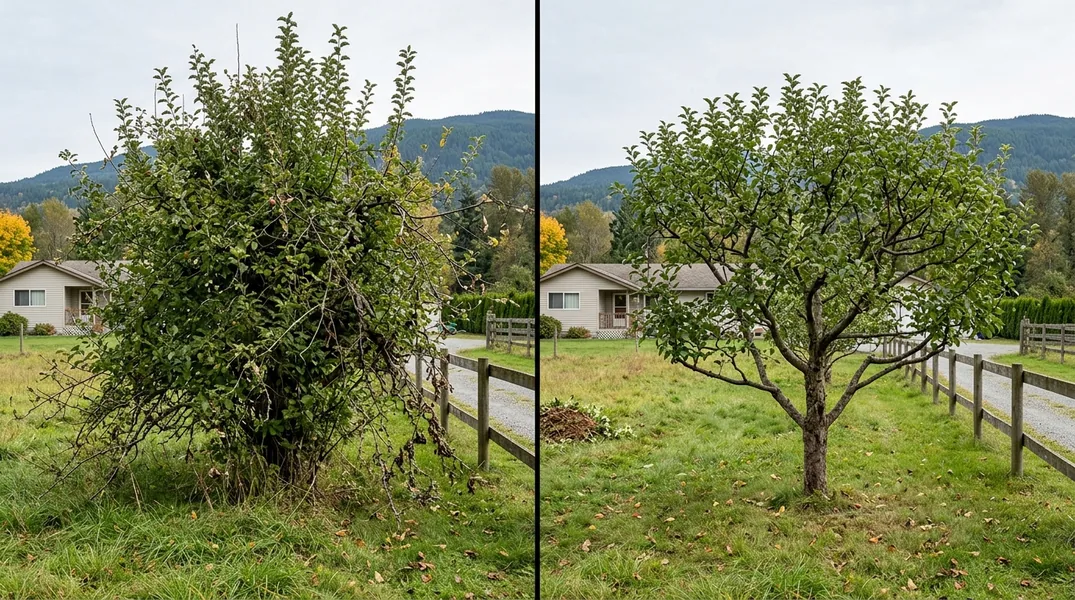
What the 2021 Atmospheric River Left Behind in Abbotsford
In November 2021, an atmospheric river stalled over the Fraser Valley and dropped an extraordinary volume of rain in a short window. On Sumas Prairie, the water rose over fields, ditches and roads, and it stayed for days in some places and weeks in others. For homeowners, the visible damage was obvious: flooded basements, stranded vehicles, washed-out driveways. What took longer to show up was the damage to trees, and much of it is still working its way through the landscape today.
The reason is simple. A tree can survive a flood and still be compromised. Waterlogged tree roots lose access to oxygen, and the fine roots that absorb water and nutrients begin to die back. The canopy may look normal for a full season before the tree starts to decline. On a property in Abbotsford, that delay is exactly why a professional inspection matters more than a quick visual scan from the back door.
Our crews work across the flood-affected ground every week, from the open fields of Bradner-Mt. Lehman (Abbotsford) to the residential streets of Townline (Abbotsford). The patterns are consistent, and they are worth understanding before you decide what to do with a tree that survived the water.
How Flooding Actually Harms Trees: Roots, Soil and Stability
Most of the damage happens underground. When soil is saturated for an extended period, the pore spaces that normally hold air fill with water instead. Roots need that oxygen to function, and without it they suffocate. The tree does not die immediately. It thins out, pushes weaker growth, and becomes more vulnerable to secondary problems such as root rot fungi that thrive in wet conditions.
The second issue is structural. Saturated soil loses much of its grip on a root plate. A mature tree that stood firm through a normal windstorm can become unstable when the ground beneath it is soft. That is why a tree leaning after flood conditions is a genuine safety concern and not a cosmetic one. A lean that appears in the months following saturation often points to partial root failure, and it can progress quickly.
Species matter too. Western redcedar and other shallow-rooted conifers are especially exposed on wet ground, while big-leaf maple and Douglas-fir on well-drained slopes tend to fare better. British Columbia clay holds water for a long time, which extends the risk window well past the flood itself. If you are unsure how your soil drains, an on-site assessment answers that question in minutes. Our Tree Pruning and inspection visits include a root zone and soil check as a standard step.
The Signs That a Flood-Damaged Tree Needs Attention
Some symptoms appear within weeks, others take a year or more. Early indicators include a thinner canopy than neighbouring trees of the same species, smaller leaves, and dieback starting at the branch tips. You may notice bark cracking or splitting near the base, or a soft, spongy feel to the soil around the trunk long after the surface has dried. Fungal fruiting bodies near the root flare are a serious warning sign and should never be ignored.
Look at the trunk as well. A change in the lean angle, cracks running vertically, or soil heaving on one side of the tree all suggest the root plate is moving. Any of these findings means the tree should be assessed before the next windstorm rather than after it. Flood damaged trees that show combined root and trunk symptoms are often beyond practical repair, and removal becomes the responsible choice for the safety of the house, the driveway and the neighbours.
Homeowners in West Abbotsford (Abbotsford) often ask whether they should wait a season to see what happens. In many cases that is reasonable, provided the tree is not leaning and has no trunk defects. Where stability is in question, waiting is not a safe option. A documented inspection gives you a clear answer either way.
Storm Damage Tree Removal in Abbotsford: When Waiting Is Not Safe
Not every compromised tree needs to come down. Where the root damage is partial and the trunk is sound, corrective Tree Trimming can reduce the load on the canopy and give the tree a better chance to recover over several seasons. Reducing end weight on long limbs lowers the leverage on a weakened root plate, which is a real and measurable benefit after saturation.
Other situations call for Tree Removal. A tree that has developed a pronounced lean, lifted soil on one side, or a split in the main stem is a hazard, and the risk rises with every wind event. For urgent cases, our emergency tree removal in Abbotsford service is set up to respond quickly, secure the area and take the tree down in controlled sections. We document the condition with photos before work begins, which is useful if you need to file a claim with your insurer.
After removal, Stump Grinding clears the remaining stump so the ground can be replanted or levelled. On flood-affected lots, removing the stump also eliminates a decaying food source for root rot fungi that could affect nearby healthy trees. If you want a clear picture of cost before committing, our pricing page outlines how we quote residential work, and a free estimate confirms the figure for your property.
Permits, Arborist Reports and Working Near Hydro Lines
The City of Abbotsford may require a permit for a private tree removal, and the rules are not always obvious from the street. An arborist report supports that application by documenting the condition of the tree and the reason for removal. We prepare these reports as part of our assessment work, and having one on file makes the municipal process considerably smoother when a tree has to come down.
Hydro lines are the other area where homeowners should not improvise. Our crews work only on clearance around your private service entrance, meaning the wire running from the utility pole to your own house, and we respect the required approach distances at all times. Any work on the public distribution network is handled by BC Hydro, not by a private contractor. If a limb is contacting or close to the service drop, we can advise on the correct next step during the site visit.
A Practical Plan for Your Property This Season
Start with a walk around the trees that stood in water or near it. Note any change in lean, any new cracks, and any section of canopy that leafed out late or not at all. Photograph what you see and date the images. That record is valuable if the tree declines further or if you need to support a claim, and it costs nothing to keep.
Then book a professional tree inspection after flood conditions. An ISA Certified Arborist can assess root stability, soil condition and trunk integrity in a single visit, and give you a written recommendation you can act on. Abbotsford Tree Trimming Co. is a local, fully insured company, and we provide free estimates for both pruning and removal work. Call (236) 602-5164 or request a free quote and we will schedule a visit at a time that suits you.
Looking for a professional in Abbotsford? Abbotsford Tree Trimming Co. responds quickly for all your tree trimming needs.
Get a free estimateOur services : Tree Trimming · Tree Removal · Stump Grinding